

Many people associate spine problems with injuries or aging, but one spine condition is actually more common in children. Scoliosis most often develops around age 11, making it the most common spinal deformity in school-age kids.
This spine condition affects between 6 and 9 million people in the United States. While it can affect both girls and boys, it’s often more severe among girls.
The good news is that scoliosis can be effectively treated, often using nonsurgical therapies. Keep reading to learn about the signs of scoliosis, who’s at risk, and how the condition is treated.
Defining Scoliosis
The spine naturally curves slightly forward and backward. In someone who has scoliosis, the spine curves to the sides, resembling a “C” or “S” shape.
There are three types of scoliosis, categorized by what causes this curvature:
- Congenital scoliosis is a rare spinal abnormality that is often detected at birth.
- Idiopathic scoliosis is scoliosis with no known cause.
- Neuromuscular scoliosis is caused by abnormalities in the muscles and nerves surrounding the spine.
Idiopathic scoliosis is by far the most common form of scoliosis, accounting for approximately 80 percent of all cases.
While scoliosis is usually identified during childhood, it can affect adults, too. Adult-onset scoliosis occurs as the spine breaks down and you lose bone density over time.
What Scoliosis Looks Like
Scoliosis varies in severity, meaning that the curvature it causes is sometimes nearly unnoticeable. Mild scoliosis may not cause any symptoms. If your child has moderate or severe scoliosis, however, you may notice a number of signs, including:
- Elevated hips
- Head that isn’t centered above the pelvis
- Leaning to one side
- Prominent shoulder blades
- Skin changes, such as discoloration or hairy patches
- Uneven legs
- Uneven shoulders
- Uneven waist
Severe scoliosis can also cause back pain, a loss of height, or even difficulty breathing as the curvature worsens.
Risk Factors for Scoliosis
Anyone can develop scoliosis, which often has no obvious underlying cause, but there are two known risk factors for this spinal condition. The risk of developing scoliosis is higher if you have a family history of the condition or if your child has an injury or condition that affects the spine or the muscles and nerves that surround it.
While girls aren’t at a higher risk of developing scoliosis, their risk of severe scoliosis is higher. They’re more likely to develop a curvature that requires treatment.
How Scoliosis Is Diagnosed
Many children receive scoliosis screenings during regular checkups with a pediatrician or family medicine provider. They’re also often provided in a school setting.
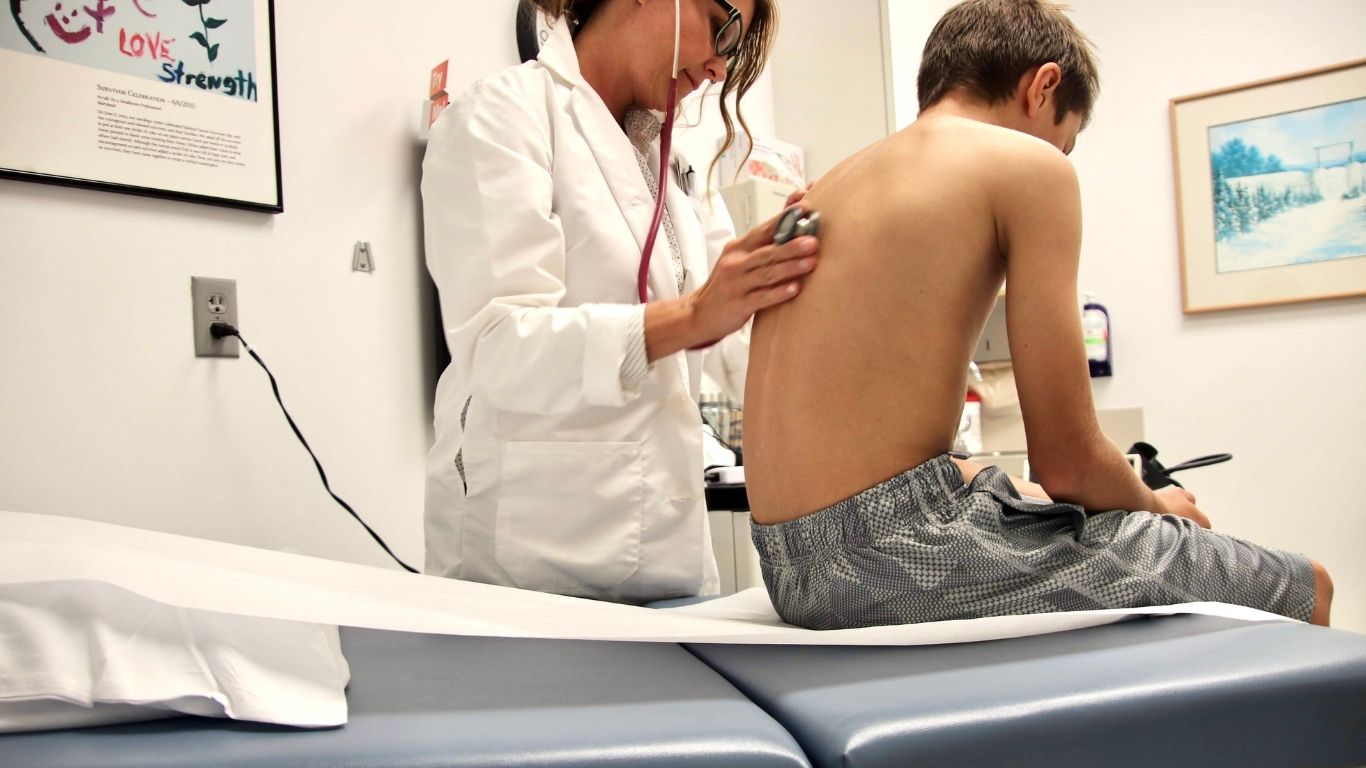
During a scoliosis screening, children are asked to remove their shirt to provide a clear look at the spine. Then they’re told to stand up straight and then bend forward as if touching their toes. This positioning allows a medical provider to get a good look at a child’s posture, alignment, and spinal curvature.
If a scoliosis screening at school identifies your child as potentially having scoliosis or you notice signs of the condition, check in with your child’s primary care provider. During an appointment, the provider will examine the spine and ask questions about any symptoms your child is experiencing.
In some cases, imaging tests such as X-rays may be used to help confirm a diagnosis. Your child’s provider will also measure the curvature of the spine to determine the severity of scoliosis.
Scoliosis Treatment Options
In many cases, mild scoliosis doesn’t require treatment. Your child’s primary care provider will keep an eye on the curvature at regular checkups and may suggest treatment in the future if the curvature worsens.
If treatment is recommended, your child’s provider may suggest a number of treatment options that can offer relief from symptoms. Conservative, nonsurgical treatment options are usually tried first and are often effective.
In cases where nonsurgical treatment does not relieve symptoms and the curvature continues to worsen, surgery may be necessary to stabilize the spine.
For moderate scoliosis, though, treatment may include:
- Bracing to support the spine
- Exercises to strengthen the core muscles and improve flexibility
- Management of underlying conditions contributing to scoliosis
- Over-the-counter pain relievers or anti-inflammatory medications
A medical provider may also suggest physical therapy, which can play an important role in strengthening the muscles around the spine and relieving pain. At Sports Plus, we offer a specialized form of physical therapy designed to treat scoliosis—the Schroth Method.
During sessions of Schroth Method therapy, participants are coached through a personalized exercise regimen that helps them improve their posture and balance. They also receive training in body awareness, making them more aware of how they’re positioning their body during everyday activities.
“The Schroth Method is a world-renowned approach for treating scoliosis,” says Lizzy Long, PT, DPT, OCS, a certified Schroth therapist with Sports Plus. “While physical therapy in general can help alleviate discomfort from scoliosis, this form of therapy uses breathwork, strength training, and posture exercises to improve posture and limit pain.”
This specialized therapy, which has existed since the 1800s, also offers bigger picture benefits.
“In some cases, it can improve the curvature of the spine, but even when the curve remains the same, it usually doesn’t worsen,” Long says. “That in and of itself is a benefit. Participating in Schroth Method therapy may help to prevent the need for surgery in the future.”
When you need specialized rehabilitation services to get you on your feet again or to improve your overall health, you don’t have to travel to get the care you need. Turn to Sports Plus Rehab Centers to access the care you need, close to home.


