
About
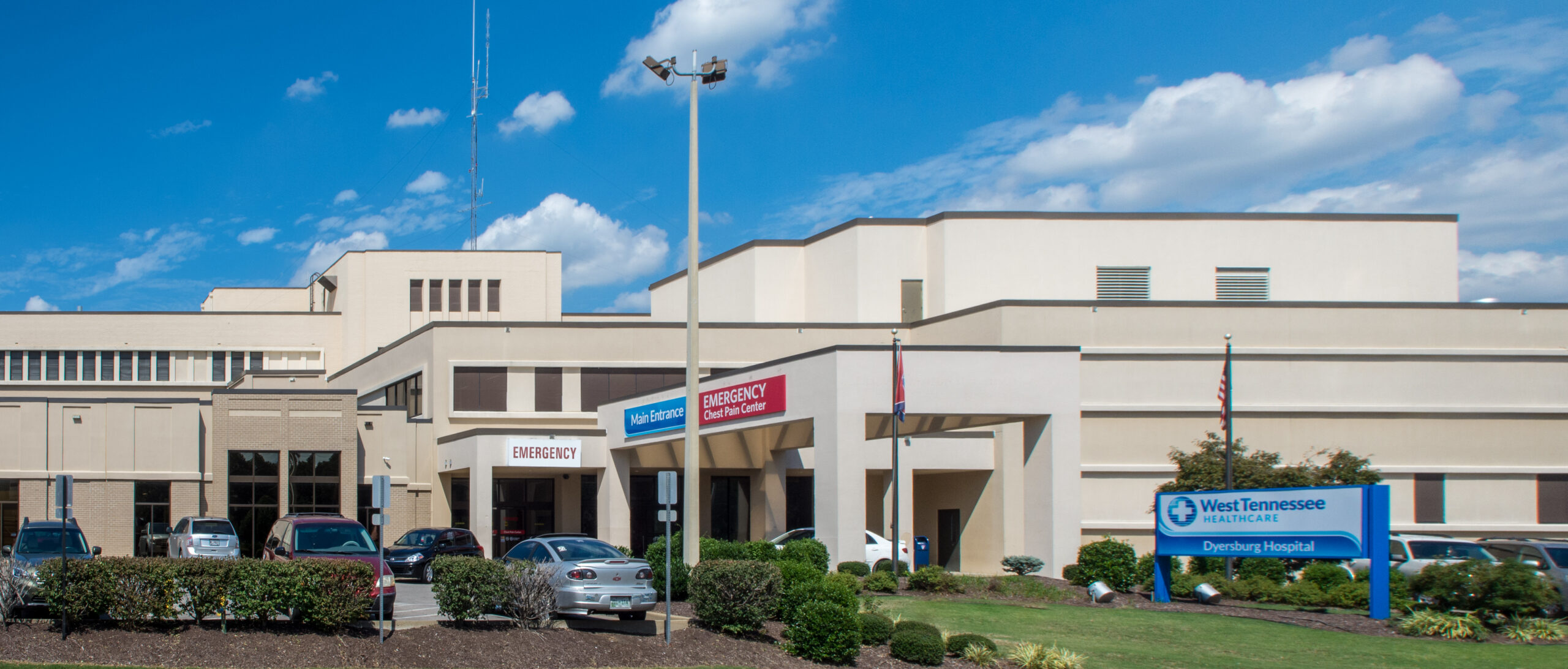
West Tennessee Healthcare Dyersburg Hospital provides 24/7 emergency care for patients throughout Dyersburg, Dyer County, and surrounding Northwest Tennessee communities. The Emergency Department treats a wide range of urgent and life-threatening conditions, helping patients access emergency medical care close to home while supporting rapid stabilization during critical situations.
As a regional community hospital serving a broader Northwest Tennessee service area, Dyersburg Hospital helps coordinate emergency care for patients requiring advanced specialty services, including cardiac, neurological, surgical, pediatric, and critical care treatment. When higher-level intervention is needed, established transfer pathways within West Tennessee Healthcare help support timely access to specialized care.
Emergency providers at Dyersburg Hospital use a shared electronic medical record system connected across West Tennessee Healthcare facilities, allowing care teams to securely access current patient information and improve coordination throughout the emergency treatment process.
Emergency Care Services at Dyersburg Hospital
- Around-the-clock emergency care for adults and children is provided by emergency physicians and advanced practice providers trained to evaluate and stabilize a wide range of urgent and life-threatening conditions.
- Emergency evaluation and treatment for serious medical concerns such as chest pain, stroke symptoms, breathing difficulties, severe infections, altered mental status, and acute abdominal conditions.
- Care for injuries and unexpected illnesses, including fractures, cuts requiring repair, dehydration, acute respiratory infections, and complications related to chronic medical conditions like diabetes, COPD, and heart failure.
- Emergency stabilization for patients requiring higher-level specialty care, with coordinated transfer access to advanced cardiac, neurological, surgical, pediatric, and critical care services within West Tennessee Healthcare.
- Diagnostic imaging services available to support emergency care decisions, including CT imaging, X-ray, and ultrasound.
- Rapid-response laboratory testing for emergency conditions, including cardiac enzyme testing, blood counts, coagulation studies, metabolic testing, and infectious disease evaluation.
- Initial emergency management of pediatric and obstetric conditions, with established transfer protocols for specialized women’s and children’s services when needed.
Emergency Department Specialties
- Emergency assessment and triage processes designed to quickly evaluate critical conditions and prioritize care for patients with life-threatening or rapidly changing symptoms.
- Cardiac emergency evaluation capabilities, including chest pain assessment, EKG testing, continuous cardiac monitoring, IV medications, and stabilization prior to transfer for advanced cardiovascular intervention when needed.
- Stroke response and neurological stabilization protocols to support rapid identification of stroke symptoms and coordinated transfer to higher-level neurovascular care centers.
- Emergency trauma stabilization for injuries requiring airway support, bleeding control, fracture management, and coordination with EMS providers and regional trauma systems.
- Telemedicine access to specialty support in areas such as Neurology and Cardiology, helping enhance emergency decision-making for complex patient cases.
- Coordinated emergency transfer pathways within West Tennessee Healthcare for patients requiring advanced surgical, neurological, cardiac, pediatric, or intensive care services.


