

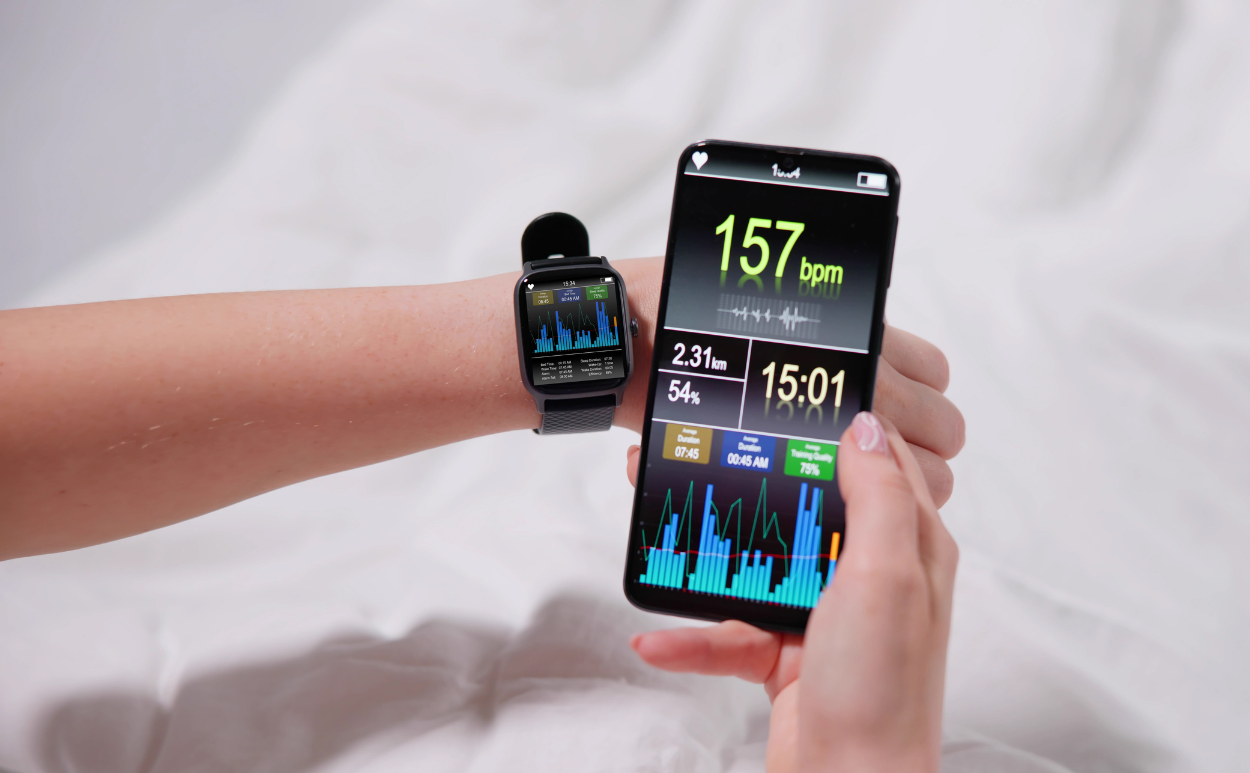
Have a smartwatch on your wrist? Stop what you’re doing and check your heart rate.
In the past, most people didn’t think a lot about their heart rate, also called pulse. That’s because checking your heart rate used to be primarily a manual process, performed by putting your fingers on your wrist and counting your heartbeats in a certain amount of time.
These days, checking your heart rate is often as easy as pressing a button on your wrist. But what can your heart rate tell you about your health? Quite a bit, actually.
Your heart rate is how many times your heart beats in one minute. When it comes to your heart health, there are two different heart rates that you should know.
The first is your resting heart rate, which is your pulse when you’re at rest. That’s how fast your heart is beating when you’re sitting at your desk or otherwise doing something sedentary.
The second is your target heart rate, which is how fast your heart should be beating when you’re physically active. Knowing your target heart rate can help you optimize your workouts to ensure you’re getting the exercise your heart needs.
What else should you know about your heart rate? We fill in some of the details below.
The Facts About Resting Heart Rate
Your heart rate naturally fluctuates throughout the day, blipping up and down as you move around or when you experience something stressful. When you’re sitting for a few minutes and breathing naturally, that’s the best, most accurate representation of your resting heart rate.
When you’re at a medical appointment and they check your pulse, they’re recording your resting heart rate. A normal resting heart rate for an adult falls somewhere between 60 and 100 beats per minute. If your heart is beating faster or slower than that while you’re at rest and calm, it can be a sign of a health issue, such as an infection or a heart health problem.
With that said, however, everyone’s normal is a little different. Resting heart rate can vary depending on a person’s age and physical fitness. Those who are physically fit usually have lower resting heart rates.
What should your resting heart rate be? In general, within the range of “normal,” lower is better. A lower resting heart rate means your heart is in good condition and isn’t having to work as hard to pump blood.
When Your Resting Heart Rate Is High…or Low
What does it mean when your pulse is lower than 60 or higher than 100 while you’re at rest? If it only happens every once in a while, it’s probably just a blip on the radar.
If your heart rate was higher than normal but quickly returned to normal, it was probably due to outside factors such as an elevated body temperature, your emotions, or even the position you’re in.
A resting heart rate that’s lower than 60 may be bradycardia, but it isn’t always reason for concern. As mentioned above, those who are physically fit may have resting heart rates in the 50s and even the 40s. Many people also experience lower resting heart rates because of medications designed to reduce strain on the heart.
On the other hand, a resting heart rate of more than 100 may be tachycardia. As with bradycardia, this isn’t always reason for concern, but it’s important to be evaluated by a medical provider to determine the underlying cause.
If your resting heart rate is regularly higher or lower than normal—or if your heart is racing or it feels like you skipped a beat—it’s a good idea to check in with a medical provider. You may be experiencing an arrhythmia, an abnormal heart rhythm.
If your heart rate is suddenly much higher or lower than what’s normal for you, call 911, especially if the abnormal heart rhythm is accompanied by chest pain or shortness of breath.
Shining a Light on Target Heart Rate
We’ve talked about your heart at rest, so what about your heart when you’re physically active? Exercising makes your heart work harder to pump blood to your muscles, which increases your heart rate.
Keeping an eye on your heart rate during your workouts can help you ensure you’re giving your heart a good workout, which strengthens the heart muscle and keeps it healthy. What should your heart rate be when you’re exercising? That’s called your “target” heart rate.
The target heart rate is a zone rather than a single number. It’s based on a percentage of your maximum heart rate, which is as fast as your heart should ever be beating during intense physical activity.
To determine your maximum heart rate, subtract your age from 220. For someone who is 35 years old, the maximum heart rate would be 185 beats per minute.
From there, you can determine the heart rate zone you should be targeting in your workouts. If you’re doing a moderate intensity workout, such as briskly walking, aim for your heart rate to be between 50 and 70 percent of the maximum. For the 35-year-old above, that would be between 92.5 and 129.5 beats per minute.
If you’re doing strenuous activity, such as running or playing tennis, your heart rate should be between 129.5 and 157.25.
Your smartwatch may already be set to your specific heart rate zones, but if it’s not, check the settings and fill in your details for a more personalized look at your workouts and their effectiveness.
During your next workout, take a peek at your heart rate. Picking up the pace or bumping up the intensity of your activity can get your heart beating faster and help you keep your heart healthy for the long run.
At West Tennessee Healthcare Heart & Vascular, we offer comprehensive care for a full range of heart health issues. That includes electrophysiology services to diagnose and treat abnormal heart rhythms.


